

Today in Use. Tomorrow Recycled. 95% Recovered.
Stainless Steels: Designed to last for decades. Recycled without loss of quality at the end of life.
When its entire lifecycle is considered, stainless steel has one of the lowest environmental impacts of any engineering material. Its exceptional durability means that products often remain in service for decades, while its unique recyclability ensures the material itself never loses its value.
On average, stainless steel products remain in use for more than 20 years, and much of the stainless steel produced over the past two decades is still serving society today. Buildings, transport systems, industrial equipment and household appliances around the world form an urban mine of valuable material that can be recovered and recycled at the end of its life.
Unlike many materials, stainless steel can be recycled repeatedly without losing its strength, corrosion resistance or performance. Rather than becoming waste, it can be transformed into new stainless steel that is as durable and long-lasting as the original. As a result, around 95% of end-of-life stainless steel is collected and recycled, making it one of the world’s most recycled materials.
A material for the circular economy
Recycling is already central to stainless steel production. On average, every tonne of new stainless steel contains around 48% recycled scrap, and producing stainless steel from recycled material can reduce emissions by up to 90% compared with production from virgin raw materials.
There is currently not enough stainless steel scrap available to meet global demand because so much of the stainless steel ever produced is still in use. As more material returns from this growing urban mine, the proportion of recycled content in new stainless steel will continue to increase, further reducing the need for virgin resources and lowering emissions.
The high intrinsic value of stainless steel scrap means that recycling is driven not only by environmental benefits but also by economics. Stainless steel is collected, traded and returned to production without the need for subsidies, helping to create a self-sustaining circular system that keeps valuable resources in use for generations.
Independent research and resources
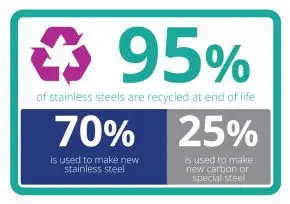 Independent research into the global life cycle of stainless steel has confirmed the material’s exceptional recycling performance and its contribution to resource efficiency. Explore the resources below to learn more about the life cycle of stainless steels.
Recycled for lasting value
In under three minutes, this video shows stainless steels as a champion of recycling, with around 95% of end-of-life stainless steels being collected and recycled into new stainless steels without loss of quality. Durability and recyclability are two of the key contributions which stainless steels makes to sustainability.